

How To Use Camera In Csp Animation
How to Animate a Scene Using Keyframes & 2d Cameras!
eight,948 views
Introduction
Hey guys, welcome back to some other spooky tutorial from your favourite midnight dweller professor Crimsy!
In today's tutorial we will create a creepy blackness and white animated screen for Twitch using keyframe blitheness and a 2D camera in Clip Studio Paint, so without further ado, permit'due south brainstorm the ritual!
Create your Canvas
The get-go thing nosotros need to practise is to create the canvas for our project.
So simply head to File --> New... And when the project window opens make certain that your canvas size follow the same prototype ratio equally the ane you stream with. Most people stream in 1080p, but I'll be going with a 4K canvas to become the meliorate image quality, which is 3840 x 2160p.
Also don't forget to make sure your DPI is at 300 likewise and so press ok.
Planning & Cartoon your Scene!
In one case your blank canvas is created, information technology'south now time to make full it with spookilicious art!
First off, retrieve that for this tutorial we'll exist animating this scene using keyframe blitheness only, not frame by frame animation, and then we can put equally much details in the art every bit we want to.
Keyframe animation, otherwise known as tween blitheness, is when you create motion out of static images using the interpolation between the keyframes on a timeline. I approximate you could say keyframe blitheness is like to moving a string boob, all the different parts of your puppet are static objects that move independently from each other and visually stay the same.
So when looking for ideas, effort to retrieve about what would expect good using simple motions, such every bit translations, rotations and scaling. Endeavor to have enough objects moving in your scene to make information technology await dynamic, but avoid going overboard with it or your canvas might end upwards like a chaotic mess.
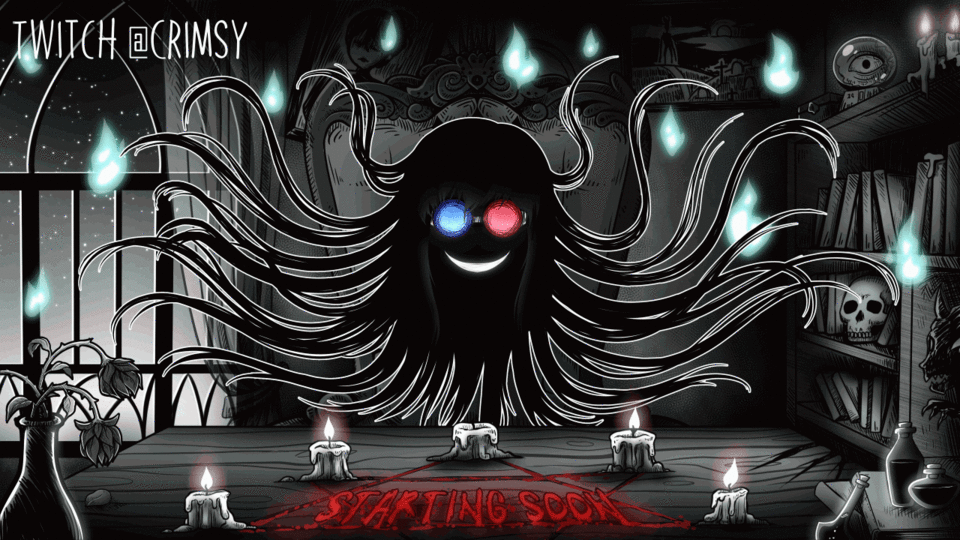
Then as y'all can probably tell, for this projection, I wanted to create a dark black and white scene with moody lighting featuring a creepy decor and my Persona'southward ghostly head levitating in the heart of it with huge blackness strands of hair floating up and down.
TIP 01: when in doubt, make sure that your move volition look good, which y'all can simulate by using Ctrl + T, moving the pin betoken (+) of your piece to its origin and rotate it effectually to see how it will look like.
TIP 02: brand the moving pieces as consummate and filled in as you lot can because moving pieces around tin definitely uncover holes in your art, which is pretty easy to avoid if you pic them as stand alone assets like this. Basically just make sure to render the whole piece, even if part of it might exist subconscious behind something else.
TIP 03: add a edge effectually objects you want to stand out a fleck. You tin add a border to private layers, just yous can too add a border to a whole folder if you like. In this scenario I added a white border to the floating head folder to make information technology pop and a black edge around the table and the roses to thicken them up a bit.
Oh and 1 terminal thing we must consider when searching for ideas is that our timeline is limited to 24 frames, that is, if you're a Prune Studio Paint Pro user. If yous bought the EX version then yous will not have whatever frame limitation.
Convert your layers to file objects
So in one case you lot've rendered all your layers and your scene is starting to expect pretty cool, make sure to save your project and create a backup copy using File --> Save As... and giving it a different name. This step is optional, but I like to keep unaltered versions of projects in full general so feel free to exercise it or skip information technology.
Once this is done, what'due south left to practise is to convert all the layers and folders of our different parts into file objects so nosotros can commencement animating our scene.
To do this merely right click on a folder or layer --> go to File object --> and and then click on catechumen layer to file object.
At that place are many benefits to converting layers and folders into file objects
1. Information technology removes clutter from the project and allows you to animate a single object using a single pivot point.
2. File objects retain all previous layer contents while assuasive yous to modify the original file as much as you wish, just the all-time thing nigh this is doing and so will not alter the animation keyframes that already exist and then even subsequently you began animating you can still make changes to the art.
3. most of import of all, once you enable keyframes on a regular layer, you will notice that said layer becomes locked, which makes you unable to perform common transformation actions like rotations and scaling, just if you catechumen it first into a file object, you can then get to the object menu and utilise all the transformation features available.
Or course, make sure to go along each and every part yous want to breathing as a carve up file object. For example I fabricated a file object for each strand of hair otherwise I could not animate them all separately.
Start Animative your Scene!
Now begins the truly fun part, bringing life into your scene!
Get-go things get-go, we'll have to create a new timeline for our animation by heading to the blitheness menu --> Timeline --> New timeline
When the timeline windows open, only make sure your playback is set to 24 frames, unless you have the EX version of Clip Studio Pigment, in which case feel gratis to make your animation last longer.
So modify the frame rate to 8 and this volition requite us a full iii seconds of animation to play with.
And so head back to the top menu --> Window --> And click on Timeline.
At present, equally you tin can see, we have our total timeline hither, experience gratis to zoom in or out of it using these magnifier glass icons and also make certain to actuate the loop icon to have your animation repeat itself once it reaches the end of the timeline.
Now let's beginning animative!
The commencement thing to consider when creating your keyframes is the type of interpolation y'all take enabled between those frames. There are three types of interpolation you can choose from, Agree, Linear and Smooth. Y'all can quickly change how your keyframes interpolate past correct clicking on the frame and switch to your desired method.
TIP: Note that this is likewise where you tin copy, cut and delete frames if needed.
Hither's a quick graphic explaining how each type of interpolation behaves, simply as a general footing, you will most probable want to use the smooth interpolation because this option creates the most organic looking motion.
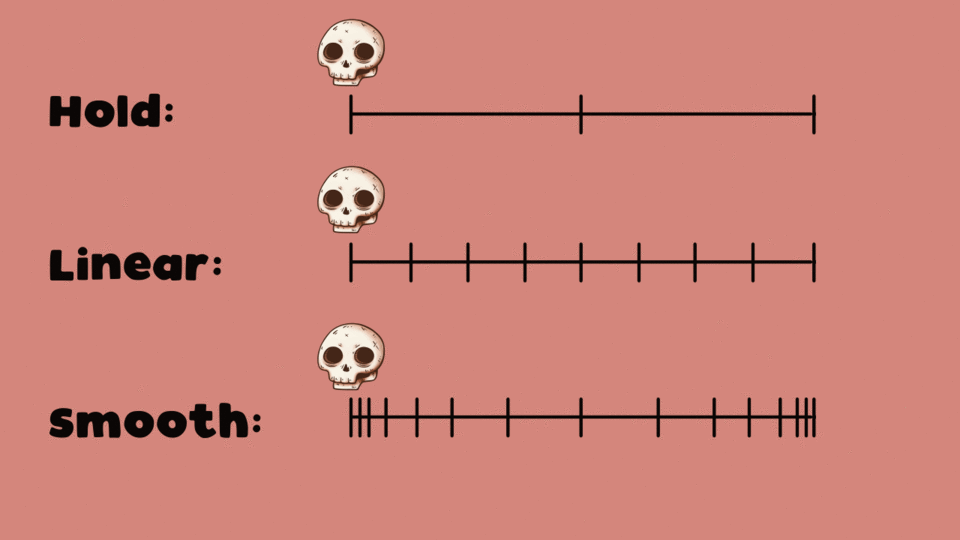
And so First, I decided to create the up and downwardly motion for the head, and so I selected all the layers from the graphic symbol binder and clicked on ''enable keyframes for this layer''.
And so go to the start frame, move the head and pressed the shortkey Yard on the keyboard to move the layers as a group and click on ''add together keyframe''.
And so to make your animation loop perfectly, press Alt on your keyboard and elevate your frames to the terminal keyframe to duplicate them or simply go to the end of your timeline and add a keyframe.
Subsequently that, all I did was add middle frames to the blitheness and fabricated sure to movement their pivot point to insure that the rotation would originate from the right position.
TIP: Delight annotation that copy/pasted frames volition keep the aforementioned pivot point, but newly created frames will take their pin at the center of the object.
And that's it, at present all that's left to do is repeat this process over and over for all the pilus and motility on to the adjacent assets.
TIP 01: it is good to note that you can move each file objects separately with the object transform tool, but you lot can't employ this tool to move multiple objects at once. You can notwithstanding enable keyframes on a folder containing multiple file objects that are themselves blithe and move, rotate or calibration them all around as one entity. You could even create a complex binder bureaucracy for puppet animation using this method, but I digress.
TIP 02: Retrieve to review your animation as ofttimes as possible during this process and feel free to hide some folders if your animation preview becomes a bit laggy.
Animating Opacity and Glow
I did follow pretty much the same steps for the unabridged scene, but information technology is worthy to specify that I also animated the opacity of certain layers to create the glow result on the writing and the candles, as well as the fume coming out of the top candle.
To animate the opacity all you must practise is press on the petty plus icon of your file object, enable keyframes and create your animation.
Adding a 2D Camera in your Scene
Despite everything looking pretty finished, in that location is still 1 terminal thing we should add to the scene to create even more depth in the movement, a subtle photographic camera motility zooming in and out.
In lodge to create camera movement in your scene, merely head over to the top carte --> Animation --> new animation layer --> second camera folder.
Side by side, simply select all the folders and layers in your scene and drag and driblet them into the camera folder.
Animating the camera is also pretty simple. I created a keyframe on frame 12, so went back to frame 01 and scaled the camera down a scrap. Not too much, just so the movement does non become nauseating, but merely plenty so the whole environment appears a bit in motion. Then, copy/paste your showtime frame at the last frame and you should be good to get.
Lastly, to evidence your camera'southward bespeak of view in the sheet, select your camera binder and in the tool's belongings, select the icon ''show camera's field of view''.
Rendering your Last Animation!
Finally, at present's the time to return your animation and meet the fruit of all your hard work before your very eyes.
To return your animation, go to File --> Consign Animation --> Select your desired output format.
I personally went with the movie option, then chose MP4 as my file extension, gave it a name and so pressed Save. Once you practice this, one terminal window will appear and let you choose your desired size and frame charge per unit. Don't forget to bank check the ''Apply 2D photographic camera effects'' box if you desire your camera movement in the final render and press ok.
And at present, we just await, that's it, so finally permit's take a look at our final render!
Final Thoughts
Pretty absurd right? >:)
Now I really promise I covered everything you guys needed in today's tutorial, if at that place's anything else yous'd like to know, if you liked this video and are feeling beholden, then feel gratuitous to comment, bear witness the channel some love by liking the video, subscribe if yous would similar to see more tutorials similar this one and let your spirit migrate away towards these other recommended videos if you feel then inclined, but that will exist information technology for me, time to cozy upward in my crypt, until adjacent fourth dimension everybody!
Aurevoir~
Users who liked this post
Source: https://tips.clip-studio.com/en-us/articles/4276
Posted by: ybanezdiestlyped1957.blogspot.com
0 Response to "How To Use Camera In Csp Animation"
Post a Comment